Dwarf Chinquapin Oak Seedling Bareroot
Species: Quercus prinoides or hybrid. Our seeds are collected from trees that may have been cross-pollinated by closely related species so the resulting seedlings may be hybrids.
History: Dwarf Chinquapin Oak (also spelled Chinkapin) is native to southern Ontario and much of the eastern and central United States. It was first described in 1801 by German botanist Karl Ludwig Willdenow but was likely well-known amongst indigenous groups in its range for its edible acorns.
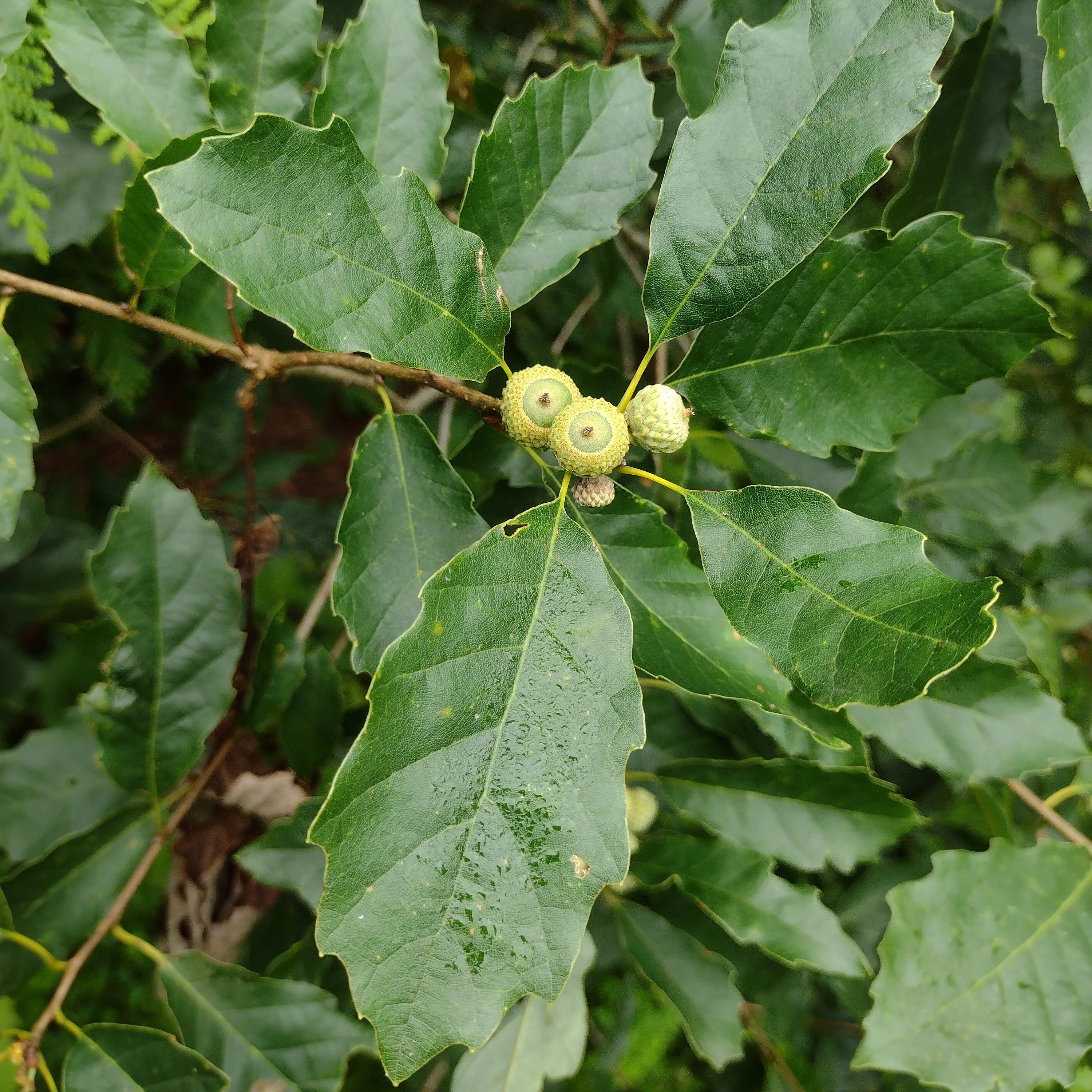
Why We Grow It: Dwarf Chinquapin Oaks are most well known for producing mild sweet acorns that can be eaten raw or processed, making them popular with humans and wildlife alike. They are also quite quick to start producing acorns, only taking 3-5 years where some larger species may take decades.
Species: Quercus prinoides or hybrid. Our seeds are collected from trees that may have been cross-pollinated by closely related species so the resulting seedlings may be hybrids.
History: Dwarf Chinquapin Oak (also spelled Chinkapin) is native to southern Ontario and much of the eastern and central United States. It was first described in 1801 by German botanist Karl Ludwig Willdenow but was likely well-known amongst indigenous groups in its range for its edible acorns.
Why We Grow It: Dwarf Chinquapin Oaks are most well known for producing mild sweet acorns that can be eaten raw or processed, making them popular with humans and wildlife alike. They are also quite quick to start producing acorns, only taking 3-5 years where some larger species may take decades.
Description
Species: Quercus prinoides or hybrid. Our seeds are collected from trees that may have been cross-pollinated by closely related species so the resulting seedlings may be hybrids.
History: Dwarf Chinquapin Oak (also spelled Chinkapin) is native to southern Ontario and much of the eastern and central United States. It was first described in 1801 by German botanist Karl Ludwig Willdenow but was likely well-known amongst indigenous groups in its range for its edible acorns.
Why We Grow It: Dwarf Chinquapin Oaks are most well known for producing mild sweet acorns that can be eaten raw or processed, making them popular with humans and wildlife alike. They are also quite quick to start producing acorns, only taking 3-5 years where some larger species may take decades.