Cherry Rootstock
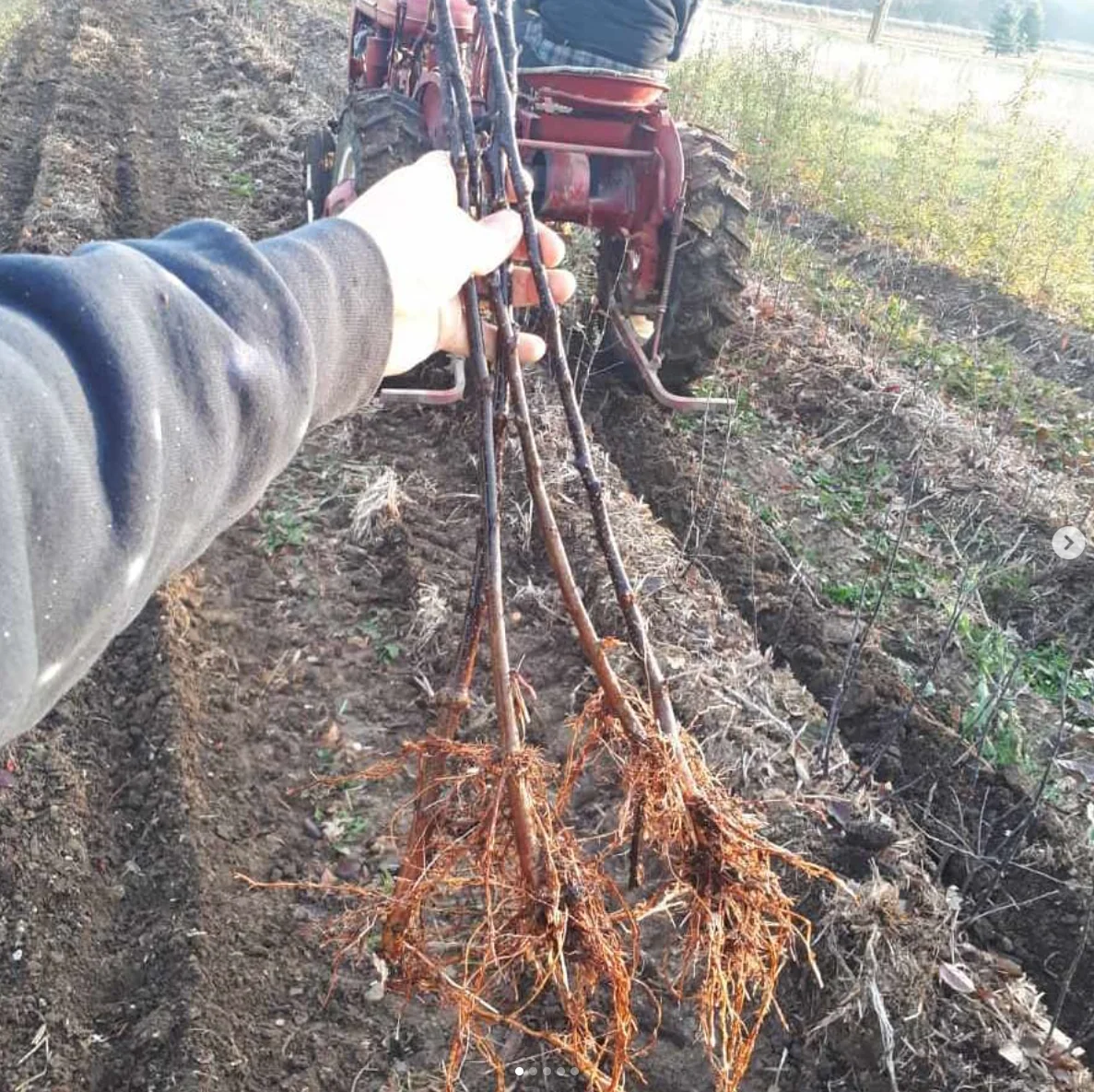
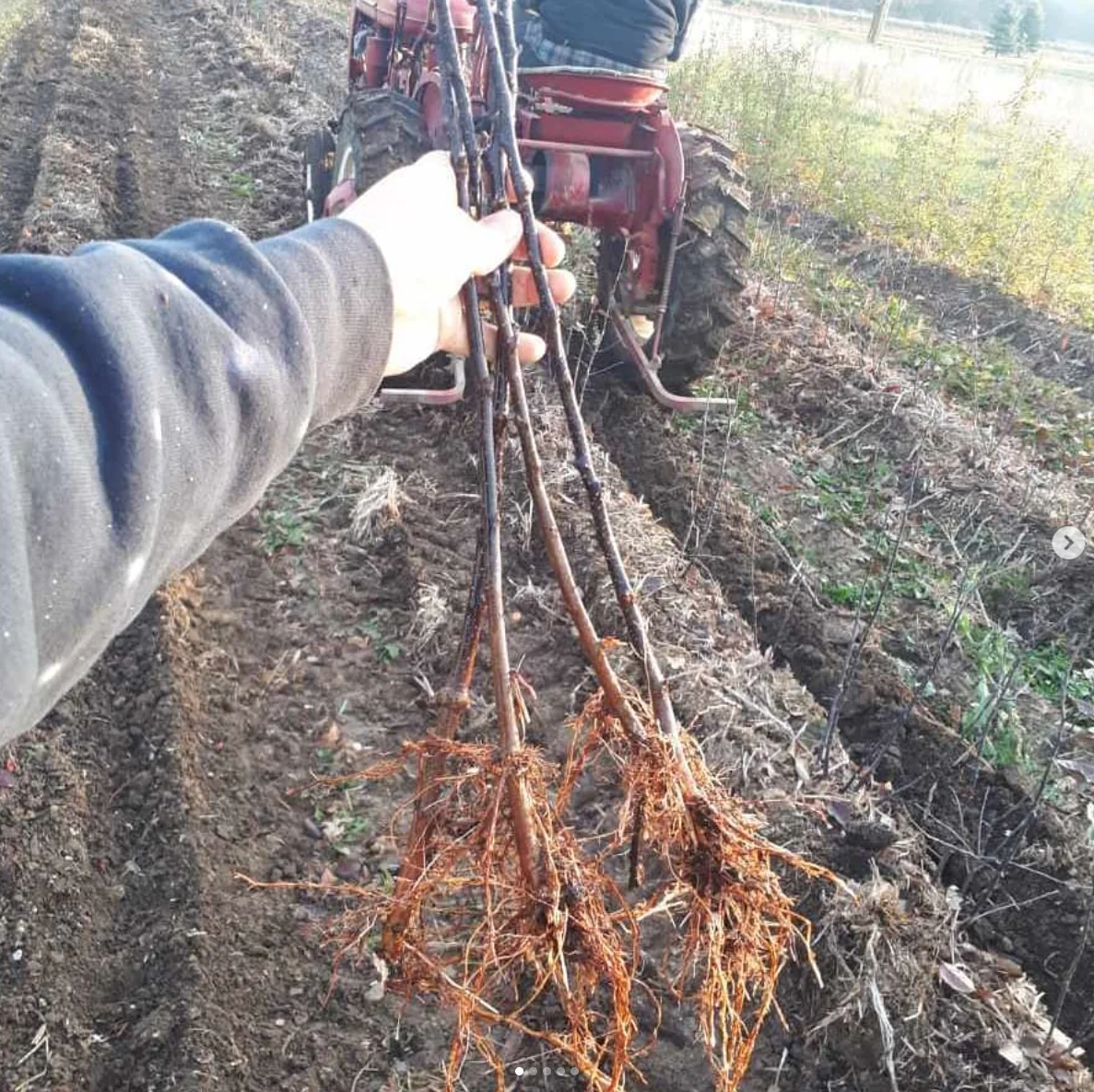
Looking to graft your own sweet or sour cherry trees? We're happy to offer rootstock!
While we have young stool beds growing, in the meantime we import rootstock from Oregon. Aside from the headache (paperwork) of importing and distance, we are very happy with our supplier's quality, and are happy to offer small scale and backyard operations with rootstock. Every August, we prepare a rootstock order for the following spring, and our order comes up on the pool truck with all the other Ontario orders. Because of this, we aren't able to guarantee ship dates with rootstock orders, as we are at the mercy of the nursery and pool truck; the shipment typically comes in March-April.
If you require more than 1000 rootstocks, we recommend importing it yourself.
We offer the following rootstock varieties:
Mahaleb - Full-size for sour cherries and semi-dwarf for sweet cherries:
- History: This rootstock is so old that its origins are a bit of a mystery, but it has been used in France since at least the end of the 1700s. It was eventually introduced to the US in the mid-1850s and by the 1900s it was more popular than Mazzard due to how easy it is to propagate from seed and its general disease resistance. However, this popularity declined when it was discovered that Mahaleb was incompatible with certain sweet cherry varieties. Despite this, it is still quite commonly used in many parts of the world today.
- Why We Use It: Mahaleb is a cold hardy and disease resistant rootstock that is also quite tolerant of drought. Cherries grafted on Mahaleb tend to be productive, vigorous, and precocious. However, Mahaleb is susceptible to crown and root rot so avoid planting it anywhere that is overly wet.
- Soil: Loam and sandy soils, prefers soils that are deep and well-drained, very sensitive to waterlogged soils
- Growth Habits: Produces a sour cherry 15-30ft tall and a sweet cherry 15-20ft tall, vigorous and precocious, anchors very well in the soil and tolerant of drought, tends to sucker
- Disease Resistance: Resistant to crown gall, canker, and some nematodes but very susceptible to collar and root rot
- Graft Compatibility: Good graft compatibility with sour cherries but incompatible with some varieties of sweet cherries
Mazzard - Full-Size:
- History: Mazzard is the oldest known sweet cherry rootstock and can be dated back to Ancient Greece and Ancient Rome. Despite its age, Mazzard remains the standard for cherry rootstock and even millennia later it remains one of the most commonly used in the world.
- Why We Use It: Mazzard is the most popular cherry rootstock in North America. Although not quite as drought tolerant or disease resistant as Mahaleb, it has better graft compatibility and is tolerant of a wider range of soils. The trees are highly vigorous and can get quite tall.
-
Canadian Hardiness Zone: 5
-
Soil: Prefers loam and sandy loam but more tolerant of wet and heavy soils than Mahaleb
- Growth Habits: Produces a tree over 20ft tall, highly vigorous, some drought tolerance, few suckers
- Disease Resistance: Somewhat resistant to root rot
- Graft Compatibility: Compatible with all sweet cherry varieties and sour cherries can also be grafted on it
Krymsk 6 - Semi-Dwarf:
- History: Krymsk 6 is part of the Krymsk series of rootstock developed at the Krymsk Experimental Breeding Station in Russia.
- Why We Use It: This cold-hardy and heat-resistant rootstock produces a tree with good anchorage that is adaptable to a wide range of soil conditions. So far it has performed much better in our clay soil than Mazzard!
-
Soil: Adaptable to a variety of soil conditions
- Growth Habits: Semi-dwarf, produces a tree 18-25ft tall, produces some suckers which may be more numerous in heavy soils, fruit tends to ripen 1-3 days ahead of trees grafted on Mazzard
- Disease Resistance: Resistant to nematodes and bacterial canker but very susceptible to prunus necrotic ringspot virus and prune dwarf virus
- Graft Compatibility: Compatible with sweet and many sour cherries although compatibility tests are still underway
If any varieties you are interested in have sold out or you want rootstock for 2027, contact us to be added to our Spring 2027 request list!
Looking to graft your own sweet or sour cherry trees? We're happy to offer rootstock!
While we have young stool beds growing, in the meantime we import rootstock from Oregon. Aside from the headache (paperwork) of importing and distance, we are very happy with our supplier's quality, and are happy to offer small scale and backyard operations with rootstock. Every August, we prepare a rootstock order for the following spring, and our order comes up on the pool truck with all the other Ontario orders. Because of this, we aren't able to guarantee ship dates with rootstock orders, as we are at the mercy of the nursery and pool truck; the shipment typically comes in March-April.
If you require more than 1000 rootstocks, we recommend importing it yourself.
We offer the following rootstock varieties:
Mahaleb - Full-size for sour cherries and semi-dwarf for sweet cherries:
- History: This rootstock is so old that its origins are a bit of a mystery, but it has been used in France since at least the end of the 1700s. It was eventually introduced to the US in the mid-1850s and by the 1900s it was more popular than Mazzard due to how easy it is to propagate from seed and its general disease resistance. However, this popularity declined when it was discovered that Mahaleb was incompatible with certain sweet cherry varieties. Despite this, it is still quite commonly used in many parts of the world today.
- Why We Use It: Mahaleb is a cold hardy and disease resistant rootstock that is also quite tolerant of drought. Cherries grafted on Mahaleb tend to be productive, vigorous, and precocious. However, Mahaleb is susceptible to crown and root rot so avoid planting it anywhere that is overly wet.
- Soil: Loam and sandy soils, prefers soils that are deep and well-drained, very sensitive to waterlogged soils
- Growth Habits: Produces a sour cherry 15-30ft tall and a sweet cherry 15-20ft tall, vigorous and precocious, anchors very well in the soil and tolerant of drought, tends to sucker
- Disease Resistance: Resistant to crown gall, canker, and some nematodes but very susceptible to collar and root rot
- Graft Compatibility: Good graft compatibility with sour cherries but incompatible with some varieties of sweet cherries
Mazzard - Full-Size:
- History: Mazzard is the oldest known sweet cherry rootstock and can be dated back to Ancient Greece and Ancient Rome. Despite its age, Mazzard remains the standard for cherry rootstock and even millennia later it remains one of the most commonly used in the world.
- Why We Use It: Mazzard is the most popular cherry rootstock in North America. Although not quite as drought tolerant or disease resistant as Mahaleb, it has better graft compatibility and is tolerant of a wider range of soils. The trees are highly vigorous and can get quite tall.
-
Canadian Hardiness Zone: 5
-
Soil: Prefers loam and sandy loam but more tolerant of wet and heavy soils than Mahaleb
- Growth Habits: Produces a tree over 20ft tall, highly vigorous, some drought tolerance, few suckers
- Disease Resistance: Somewhat resistant to root rot
- Graft Compatibility: Compatible with all sweet cherry varieties and sour cherries can also be grafted on it
Krymsk 6 - Semi-Dwarf:
- History: Krymsk 6 is part of the Krymsk series of rootstock developed at the Krymsk Experimental Breeding Station in Russia.
- Why We Use It: This cold-hardy and heat-resistant rootstock produces a tree with good anchorage that is adaptable to a wide range of soil conditions. So far it has performed much better in our clay soil than Mazzard!
-
Soil: Adaptable to a variety of soil conditions
- Growth Habits: Semi-dwarf, produces a tree 18-25ft tall, produces some suckers which may be more numerous in heavy soils, fruit tends to ripen 1-3 days ahead of trees grafted on Mazzard
- Disease Resistance: Resistant to nematodes and bacterial canker but very susceptible to prunus necrotic ringspot virus and prune dwarf virus
- Graft Compatibility: Compatible with sweet and many sour cherries although compatibility tests are still underway
If any varieties you are interested in have sold out or you want rootstock for 2027, contact us to be added to our Spring 2027 request list!
Original: $6.14
-70%$6.14
$1.84Description
Looking to graft your own sweet or sour cherry trees? We're happy to offer rootstock!
While we have young stool beds growing, in the meantime we import rootstock from Oregon. Aside from the headache (paperwork) of importing and distance, we are very happy with our supplier's quality, and are happy to offer small scale and backyard operations with rootstock. Every August, we prepare a rootstock order for the following spring, and our order comes up on the pool truck with all the other Ontario orders. Because of this, we aren't able to guarantee ship dates with rootstock orders, as we are at the mercy of the nursery and pool truck; the shipment typically comes in March-April.
If you require more than 1000 rootstocks, we recommend importing it yourself.
We offer the following rootstock varieties:
Mahaleb - Full-size for sour cherries and semi-dwarf for sweet cherries:
- History: This rootstock is so old that its origins are a bit of a mystery, but it has been used in France since at least the end of the 1700s. It was eventually introduced to the US in the mid-1850s and by the 1900s it was more popular than Mazzard due to how easy it is to propagate from seed and its general disease resistance. However, this popularity declined when it was discovered that Mahaleb was incompatible with certain sweet cherry varieties. Despite this, it is still quite commonly used in many parts of the world today.
- Why We Use It: Mahaleb is a cold hardy and disease resistant rootstock that is also quite tolerant of drought. Cherries grafted on Mahaleb tend to be productive, vigorous, and precocious. However, Mahaleb is susceptible to crown and root rot so avoid planting it anywhere that is overly wet.
- Soil: Loam and sandy soils, prefers soils that are deep and well-drained, very sensitive to waterlogged soils
- Growth Habits: Produces a sour cherry 15-30ft tall and a sweet cherry 15-20ft tall, vigorous and precocious, anchors very well in the soil and tolerant of drought, tends to sucker
- Disease Resistance: Resistant to crown gall, canker, and some nematodes but very susceptible to collar and root rot
- Graft Compatibility: Good graft compatibility with sour cherries but incompatible with some varieties of sweet cherries
Mazzard - Full-Size:
- History: Mazzard is the oldest known sweet cherry rootstock and can be dated back to Ancient Greece and Ancient Rome. Despite its age, Mazzard remains the standard for cherry rootstock and even millennia later it remains one of the most commonly used in the world.
- Why We Use It: Mazzard is the most popular cherry rootstock in North America. Although not quite as drought tolerant or disease resistant as Mahaleb, it has better graft compatibility and is tolerant of a wider range of soils. The trees are highly vigorous and can get quite tall.
-
Canadian Hardiness Zone: 5
-
Soil: Prefers loam and sandy loam but more tolerant of wet and heavy soils than Mahaleb
- Growth Habits: Produces a tree over 20ft tall, highly vigorous, some drought tolerance, few suckers
- Disease Resistance: Somewhat resistant to root rot
- Graft Compatibility: Compatible with all sweet cherry varieties and sour cherries can also be grafted on it
Krymsk 6 - Semi-Dwarf:
- History: Krymsk 6 is part of the Krymsk series of rootstock developed at the Krymsk Experimental Breeding Station in Russia.
- Why We Use It: This cold-hardy and heat-resistant rootstock produces a tree with good anchorage that is adaptable to a wide range of soil conditions. So far it has performed much better in our clay soil than Mazzard!
-
Soil: Adaptable to a variety of soil conditions
- Growth Habits: Semi-dwarf, produces a tree 18-25ft tall, produces some suckers which may be more numerous in heavy soils, fruit tends to ripen 1-3 days ahead of trees grafted on Mazzard
- Disease Resistance: Resistant to nematodes and bacterial canker but very susceptible to prunus necrotic ringspot virus and prune dwarf virus
- Graft Compatibility: Compatible with sweet and many sour cherries although compatibility tests are still underway
If any varieties you are interested in have sold out or you want rootstock for 2027, contact us to be added to our Spring 2027 request list!